Source cotton candy maker for candy, chips, and popcorn
Find 30 cotton candy maker units from verified Chinese manufacturers. Compare specifications, prices, and customization options for commercial use in candy, chips, and popcorn production.
Key considerations
Products List




Comprehensive Sourcing Guide
Strategic Sourcing Guide for Cotton Candy Maker Procurement
Sourcing industrial-grade cotton candy makers requires a disciplined approach that balances technical performance, regulatory compliance, and total cost of ownership. The global market for confectionery machinery is diverse, ranging from compact units suitable for small events to high-capacity automated systems designed for commercial amusement parks and large-scale production facilities. Buyers must navigate a landscape where product attributes vary significantly between suppliers. This guide synthesizes available market data to provide a framework for evaluating potential suppliers, ensuring that procurement decisions are grounded in verifiable facts rather than marketing assertions. The following sections detail the critical technical specifications, compliance requirements, cost structures, and operational considerations necessary for a successful procurement cycle.
Technical Specifications and Operational Capabilities
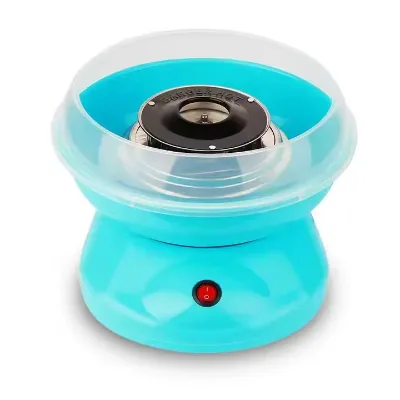
When evaluating cotton candy makers, the primary focus must be on the machine's capacity, power requirements, and material construction. The observed market data indicates a wide variance in physical dimensions and weight, reflecting the difference between portable units and heavy-duty commercial installations. For instance, specific models are documented with dimensions such as 26x26x13 cm, suggesting compact, perhaps tabletop or mobile units, while other industrial-grade machines are listed with substantial footprints like 1.31m x 0.79m x 2.35m or 1300x670x1950mm. Weight specifications further illustrate this divide, with some units weighing as little as 4 kg, whereas heavy-duty commercial models can reach 320 kg.
Material composition is a critical determinant of longevity and hygiene. The predominant material observed in the supply chain is stainless steel, which is essential for food contact surfaces due to its resistance to corrosion and ease of cleaning. However, some product listings also indicate a composite construction of metal, acrylic, and plastic. Buyers must verify which components are food-grade and which are structural or cosmetic. The power source is consistently listed as electric, with voltage specifications typically ranging from 220V to 240V. This standard voltage range is common for commercial equipment in many regions, but it necessitates careful verification of local grid compatibility.
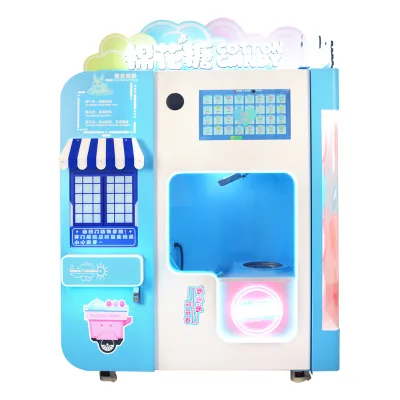
Processing capabilities are another key differentiator. The core process for these machines is thermal processing, which involves heating sugar to a specific temperature to spin it into fibers. Advanced models feature automatic grading and touch screen interfaces, allowing for precise control over the spinning speed and heating elements. Some units are equipped with specialized features such as power-off protection, failure self-detection, and the ability to provide small change, indicating a level of automation suitable for unattended or semi-attended commercial environments. The application scope is broad, covering candy, chips, popcorn, and chocolate, suggesting that many of these machines are multi-functional confectionery processors rather than single-purpose devices.
Compliance and Certification Verification
Regulatory compliance is non-negotiable in the food machinery sector. The supply chain data highlights specific certifications, most notably the CE mark, which is frequently listed across various product models. The presence of the CE certification suggests that the equipment meets European Union safety, health, and environmental protection requirements. Additionally, the MET certification is observed in the product attributes, which may indicate compliance with specific mechanical or electrical safety standards relevant to the manufacturing origin.
Buyers must exercise caution when interpreting certification claims. While the CE mark is a common observation, it should not be assumed to be universally present on every unit without verification. The data also references RoHS in a low-confidence context, meaning that while some suppliers may claim compliance with Restriction of Hazardous Substances directives, this cannot be asserted as a standard fact for all listed products. Procurement teams should request valid, up-to-date certification documents directly from the supplier for the specific model number being purchased. It is essential to confirm that the certification covers the specific voltage and power specifications of the unit, as a machine certified for one voltage range may not be compliant for another.
Furthermore, the origin of the product plays a role in compliance. The majority of the observed products originate from China, with specific mentions of Guangdong and Guangzhou as production hubs. While these regions are major manufacturing centers, buyers should ensure that the specific factory has the necessary quality management systems in place to maintain consistent compliance. The "new" condition of the products listed implies that buyers are dealing with current inventory, but verifying the manufacturing date and the validity of the certifications at the time of shipment is a prudent step.
Cost Drivers and Pricing Structures
The pricing for cotton candy makers in the current market exhibits a vast range, observed between $7.98 and $10,999 USD. This disparity is driven by several factors, including the machine's capacity, level of automation, material quality, and included features. The lower end of the price spectrum likely corresponds to smaller, manual, or semi-automatic units with basic functionality, while the higher end reflects fully automated systems with touch screens, advanced safety features, and large capacities.
The Minimum Order Quantity (MOQ) is another significant cost driver. The observed MOQ ranges from 1 piece to 30 pieces. For small businesses or event organizers, an MOQ of 1 piece is highly advantageous, allowing for single-unit procurement without the need for bulk investment. Conversely, larger organizations may benefit from the higher MOQ tiers if they can negotiate volume discounts or require multiple units for different locations. The selling units are typically listed as "Single item," which simplifies the purchasing process for individual buyers.
Packaging costs and logistics also influence the total landed cost. The data indicates that products are shipped in wooden boxes or wooden packing, often supplemented with bubble wrap for protection. This robust packaging is necessary for heavy machinery, such as the 320 kg units, to prevent damage during transit. However, wooden packaging adds weight and volume, which can increase shipping costs. Buyers should factor in the cost of crating and potential customs duties associated with wooden materials when calculating the total budget.
Typical Applications and Usage Scenarios
The versatility of cotton candy makers allows them to be deployed in a wide array of commercial settings. The primary application is the production of candy, but the observed data also lists chips, popcorn, and chocolate as compatible products. This multi-functionality makes these machines attractive for venues that offer a variety of confectionery options, such as amusement parks, carnivals, movie theaters, and shopping malls.
The usage classification is predominantly "commercial," indicating that these machines are built for high-volume, frequent operation. The "daily products" type classification suggests they are designed for regular, everyday use rather than occasional or seasonal deployment. Some units are rated for "semi-outdoor" environmental conditions, which is a crucial specification for outdoor events where weather protection may be limited. Buyers must ensure that the machine's environmental rating matches the intended operating location to prevent premature failure due to moisture or temperature fluctuations.
Capacity is a decisive factor in application suitability. The observed capacity range of 8-12 kg per cycle is suitable for medium-to-large scale operations. For smaller events, a unit with lower capacity might be more appropriate to avoid waste and ensure efficiency. The "large capacity" feature is highlighted as a key selling point, suggesting that high-volume production is a priority for many buyers in this category.
Supplier Evaluation and Quality Assurance
Evaluating suppliers requires a focus on their ability to provide consistent quality and support. The "Easy to Operate" and "High Efficiency" attributes are frequently cited as advantages, but these claims should be validated through product demonstrations or third-party reviews. The presence of a "Touch Screen" interface and "Extended Networking" capabilities suggests a modern, user-friendly design that can integrate into existing operational workflows.
Quality control should be a central part of the supplier evaluation process. Buyers should verify the "condition" of the product, ensuring it is listed as "new" and not refurbished or used. The warranty period is a critical indicator of supplier confidence; the observed data specifies a 1-year warranty, which is a standard baseline. Buyers should inquire about the scope of this warranty, including what components are covered and the process for claiming repairs or replacements.
The "Customization" attribute is available in the market, allowing buyers to request specific colors or modifications. This flexibility can be valuable for branding purposes, but it may impact lead times and costs. Suppliers should be asked to provide a clear timeline for customized orders and to confirm that any customizations do not void the warranty or compromise safety certifications.
Long-Term Procurement and Maintenance Considerations
Sourcing cotton candy makers is not a one-time transaction but the beginning of a long-term operational relationship. The "1 Year" warranty provides initial protection, but buyers should plan for long-term maintenance and spare parts availability. The complex nature of thermal processing machines means that components like heating elements, motors, and spinning heads will eventually require replacement.
Buyers should request a list of recommended spare parts and the lead time for obtaining them. The "Failure Self Detection" feature mentioned in some models is a significant advantage for maintenance, as it can alert operators to issues before they cause catastrophic failure. However, the effectiveness of this feature depends on the quality of the software and the responsiveness of the supplier's support team.
Environmental conditions also play a role in long-term performance. For units rated for "semi-outdoor" use, buyers must ensure that the machine is properly maintained to withstand exposure to the elements. Regular cleaning and inspection are essential to prevent sugar buildup, which can affect the thermal processing efficiency and hygiene of the machine.
In conclusion, sourcing cotton candy makers requires a comprehensive understanding of the technical, regulatory, and commercial factors involved. By carefully analyzing specifications, verifying certifications, and evaluating supplier capabilities, buyers can make informed decisions that ensure operational efficiency and product quality. The wide range of options available in the market allows for tailored solutions that meet the specific needs of diverse commercial applications, from small events to large-scale industrial production.
FAQs
What certifications do cotton candy makers typically have?
Most units carry CE and MET certifications for safety compliance. Buyers should verify specific documents for the model, as RoHS claims are not consistently confirmed across all listings.
How much does a commercial cotton candy maker cost?
Prices range widely from 7.98 to 10999 USD depending on capacity and automation. Higher costs reflect features like touch screens and larger thermal processing capabilities for industrial use.
Can I customize the color of the machine?
Yes, customization including specific colors is available for many models. Buyers should confirm lead times and pricing impacts before ordering to ensure branding requirements are met.
What is the minimum order quantity for these machines?
The minimum order quantity can be as low as 1 piece for single items. Some suppliers may require up to 30 pieces, so check specific vendor terms before purchasing.
Where are these machines manufactured and shipped from?
Products originate primarily from China, with hubs in Guangdong and Guangzhou. Buyers should verify the specific factory location to ensure quality control and shipping logistics align with their needs.
What materials are used in the construction of these units?
Stainless steel is the predominant material for food contact surfaces to ensure hygiene. Some models also utilize a combination of metal, acrylic, and plastic for structural and cosmetic parts.
What is the warranty period for these machines?
A standard 1-year warranty is provided for new units in the current market. This coverage typically applies to manufacturing defects but excludes damage from improper use or environmental factors.